Showing posts with label Enterprise & Consumer IT. Show all posts

Wednesday, November 13, 2019

API Management Market Latest Trends, Growth, Opportunities and Forecast 2026

Application program interface (API) management is a set of processes that can design, publish, document, and analyze APIs in a secure environment. Also, it can distribute, control, and analyze various APIs that link applications and data across enterprise and clouds. Organizations can guarantee that the public and internal APIs created are consumable and secure through an API management solution. The primary goal of API management is to allow enterprises to utilize or publish an API, to monitor the interface's lifecycle, and to ensure that the developers and applications using the API needs are met. Hence, the global API management market size is anticipated to significant growth during the forecast period.  API management is mainly about centralizing the control of API programming which includes analytics, access control, monetization, and developer workflows. For example, Red Hat 3scale API management solution, provides flexibility, dependability, speed, and quality. Also, an API management solution provides rate limits, access control, and usage policies at the minimum.



Increase in demand for API-led connectivity is primarily driving the growth of the API management market. In addition, businesses across the globe are implementing strategies to manage their application program interface to rapidly respond to the changes in customer demands. This is a major factor expected to boost the growth of the global API management market. Companies among various industry verticals are focusing on offering enhanced in-store or out-store experience along with customized recommendations, product support, and offers according to the gender, location, and behavior of the customer though API management solutions. These are the major factors that are expected to drive the growth of the global API management market. However, dearth of professionals required for developing and implementing API management solutions is a challenging factor that can hamper the growth of the global API management market. On the contrary, low-code platform for API development is expected to offer significant opportunities for this market.

Ask for Request Sample Report @  

The global API management market is segmented based on component, deployment, enterprise size, industry vertical, and region. Based on component, it is bifurcated into solutions and services. By solution, the market is further sub-segmented into security, API platform, API analytics. By services, the market is further sub-segmented into consulting, support and maintenance, training and education, and integration and implementation. Based on deployment, the market is categorized into cloud and on-premises. Based on enterprise size, it is classified into large enterprises and small & medium enterprises (SMEs). Based on industry vertical, it is divided into travel & transportation, media & entertainment, retail, healthcare & life sciences, IT & telecommunications, banking, financial services & insurance (BFSI), and others. Based on region, it is analyzed across North America, Europe, Asia-Pacific, and LAMEA.

KEY BENEFITS FOR STAKEHOLDERS
  • The study provides an in-depth analysis of the global API management market size along with the current trends and future estimations to elucidate the imminent investment pockets.
  • Information about key drivers, restraints, and opportunities and their impact analysis on the market size is provided.
  • Porter’s five forces analysis illustrates the potency of buyers and suppliers operating in the industry.
  • The quantitative analysis of the global API management market industry from 2018 to 2026 is provided to determine the market potential.

KEY MARKET SEGMENTS

By Component
  • Solution
  • Security
  • API Platform
  • API Analytics
  • Services
  • Consulting
  • Support and Maintenance
  • Training and Education
  • Integration and Implementation
By Deployment
  • Cloud
  • On-Premises
By Enterprise Size
  • Large Enterprises
  • Small & Medium Enterprises (SMEs)
By Industry Vertical
  • Travel & Transportation
  • Media & Entertainment
  • Retail
  • Healthcare & Life Sciences
  • IT & Telecommunications
  • Banking, Financial Services & Insurance (BFSI)
Key Players
  • CA Technologies
  • Google LLC
  • IBM Corporation
  • Microsoft Corporation
  • MuleSoft, LLC
  • Oracle Corporation
  • Red Hat, Inc.
  • SAP SE
  • Software AG
  • TIBCO Software, Inc.
  • Amazon Web Services, Inc.
Similar Reports:


Behaviour Analytics Market 2026 with Strategic Trends Growth, Revenue

Behavior analytics is the area of data analytics that focuses on providing insight into the actions of people, usually regarding online purchase. It is used in e-commerce, gaming, social media, and other applications to identify opportunities to optimize in order to realize specific business outcomes. It is based on hard data-it uses the volumes of raw data people use while they are on social media or in gaming applications. This data is collected and analyzed and then used as the basis of making certain decisions, including advertisement placement. It is used to analyze the patterns of human behavior and then apply statistical analysis and algorithms to detect variances.


Growth in adoption of cloud-based behavior, analytic solutions, and improvement of security measures in behavior analytics are the major factors that drive the growth of the behavior analytics market. In addition, rise in need for threat prevention technologies and increase in demand for real-time analytics fuel the growth of the behavior analytics market. However, the shortage of trained security professionals and lack of awareness regarding advanced insider threats hamper the growth of the behavior analytics market. Furthermore, advanced cloud-based behavior analytics solutions offer better handling of sensitive data, thus providing major opportunities for behavior analytics market growth.

Download Sample PDF Brochure @  

The behavior analytics market is segmented based on component, deployment mode, organization size, industry vertical, and region. In terms of component, the market is segmented into solution and services. The solution type is further sub-segmented into compromised credential detection solutions, insider threat detection solutions, loss prevention solutions, and others. The service segment is further sub-divided into managed services and professional services. As per deployment mode, the market is bifurcated into on-premise and cloud. In terms of organization size the market is segmented into large size organization and small and medium size organization. As per industry vertical, the market is classified into BFSI, it and telecommunication, manufacturing, healthcare, and others. Based on region, the market is analyzed across North America, Europe, Asia-Pacific, and LAMEA (Latin America, Middle East, and Africa).

KEY BENEFITS FOR STAKEHOLDERS
  • The study provides an in-depth analysis of the global behavior analytics market size along with the current trends and future estimations to elucidate the imminent investment pockets.
  • Information about key drivers, restraints, and opportunities and their impact analysis on the market size is provided.
  • Porter’s five forces analysis illustrates the potency of buyers and suppliers operating in the industry.
  • The quantitative analysis of the global behavior analytics market share from 2018 to 2026 is provided to determine the market potential

KEY MARKET SEGMENTS
By Component
  • Solution
  • Compromised Credential Detection Solutions
  • Insider Threat Detection Solutions
  • Loss Prevention Solution
  • Services
  • Professional Service
  • Managed Service
By Deployment Mode
  • On-premise
  • Cloud
By Organization Size
  • Large Size Organization
  • Small & Medium Size Organization
By Industry Vertical
  • Banking, Financial Services, and Insurance (BFSI)
  • IT & Telecommunication
  • Manufacturing
  • eHealthcar
KEY MARKET PLAYERS PROFILED IN THE REPORT
  • IBM Corporation
  • Microsoft Corporation
  • Splunk Inc.
  • Varonis Systems Inc.
  •  Exabeam Inc.
  •  Niara Inc.
  • SAP SE
  •  Oracle Corporation
  • NTT Data Corporation
  • Tibco Software Inc.
Similar Reports:


Tuesday, October 15, 2019

Image Recognition Market Research Methodology and Market Estimation by 2019-2025

Image Recognition Market by Deployment Mode (On-Premise and Cloud), Component (Hardware, Software, and Services, Industry Vertical (IT & Telecom, BFSI, Healthcare, Retail, Government, Media & Entertainment, Transportation & Logistics, Manufacturing, and Others), Technology (Object Detection, QR/Barcode Recognition, Facial Recognition, Pattern Recognition, and Optical Character Recognition), and Application (Scanning & Imaging, Security & Surveillance, Image Search, Augmented Reality, Marketing & Advertising): Global Opportunity Analysis and Industry Forecast, 2018-2025. The report offers in-depth analyses of the industry by closely monitoring the key industry trends, drivers & opportunities, top investment pockets, growth strategies, key player positioning, and competitive landscape. According to the report, the global image recognition market was pegged at $17.91 billion in 2017 and is expected to reach $86 billion by 2025, registering a CAGR of 21.8% from 2018 to 2025.

Growing popularity of media cloud services and increasing pace of technological advancements in facial recognition technology drive the growth of the global image recognition market. Moreover, surge in the number of mobile devices equipped with cameras and rise in demand for security applications and products laden with image recognition features supplement the market growth. However, high cost of installation of image recognition systems is expected to hamper the market growth. On the contrary, supportive regulations that mandate the use of image recognition products and high demand of image recognition in the healthcare industry are expected to provide lucrative opportunities to the market.
Cloud segment to be lucrative through 2025 
The cloud segment captured 55.9% of the total market share in 2017 and would maintain its dominance through the forecast period, owing to increased adoption of cloud in various industry verticals such as media & entertainment, banking, financial services, and insurance (BFSI), and government organizations. The segment is expected to grow at the fastest CAGR of 23.3% through 2025. On the other hand, the on-premise segment would grow at a steady pace during the forecast period.
Service segment to grow the fastest through 2025 
The service segment accounted for the largest share of 47.5% in 2017 and would maintain its lead through 2025, registering the fastest CAGR 23.5% from 2018 to 2025. This is attributed to the growing popularity of media cloud services and increasing demand for managed network security services. The other components discussed in the study are hardware and software.
Healthcare segment to grow the fastest CAGR through 2025 
The healthcare segment is expected to grow at the fastest CAGR of 28.4% during the forecast period, owing to the increasing adoption of image recognition along with growing demand for image recognition in clinical decision support to enhance the efficiency of pathologists, radiologists, and other image-based diagnosticians. However, the retail segment held the largest share of 22.4% in 2017, as increased adoption of image recognition in this industry leads to in-store promotion and increases consumer engagement. On the other hand, the transportation & logistics segment is expected to contribute the largest share of 17.9% through 2025. The report also discusses IT & telecom, BFSI, government, media & entertainment, manufacturing, among other industries.
Object detection segment to dominate, facial recognition to witness robust growth through 2025 
The object detection technology segment garnered 33% of the total market share in 2017 and is projected to maintain its lion's share through 2025. However, the facial recognition segment is expected to witness the fastest CAGR of 26.1% through the study period, owing to increased usage of the technology in both law enforcement and non-law enforcement applications. Moreover, the technology is widely preferred over other biometric technologies due to its non-contact process and easy deployment (using cameras and existing monitoring devices). The other technologies analyzed in the report include QR/barcode recognition, pattern recognition, and optical character recognition.
Image search segment to dominate, augmented reality segment to attain fastest growth 
The image search segment held the largest share in 2017, capturing 35.4% of the overall total market share. It is expected to maintain its lead through 2025, as this technology is increasingly used in the e-commerce sector for various applications such as visual search, product tagging, and content curation. However, the augmented reality segment is expected to grow at the fastest CAGR of 26.7% from 2018 to 2025. The other applications discussed in the report include scanning & imaging, security & surveillance, and marketing & advertising.
Asia-Pacific to grow the fastest, North America to accrue highest revenue 
In 2017, the North America contributed 46.7% of the total market share in 2017, owing to surge in the number of users of electronic gadgets and smartphones with image recognition applications. However, Asia-Pacific would manifest the fastest CAGR of 25.4% during the study period, owing to lurking threats due to terrorist attacks and growing trend towards e-governance in the region. The other regions analyzed in the report are Europe and Latin America, Middle East, and Africa (LAMEA).
Torchbearers of the Industry 
The leading companies operating in the global image recognition market include IBM Corporation, Imagga Technologies Ltd., Amazon Web Services, Inc., Qualcomm Incorporated, Google LLC, Microsoft Corporation, NEC Corporation, LTU technologies, Catchoom Technologies S.L., and Intel Corporation.
Driving factors for the market
1. Growing use of image recognition applications
2. Technological advancements in facial recognition technology
3. Growing demand for security applications and products enabled with image recognition functions
4. Supportive regulations that mandate the use of image recognition solutions
For more information about this report visit :  

Intelligent Virtual Assistant Market Application Estimates and Outlook Overview by 2014-2020

Intelligent Virtual Assistant Market report, published by Allied Market Research, forecasts that the global market is expected to garner $3.6 billion by 2020, registering a CAGR of 35.2% during the period 2015 - 2020. North America dominates the global intelligent virtual assistant market owing to the increased adoption of IVA in countries such as the U.S. However, Asia-Pacific region is expected to exhibit a faster growth over the forecast period 2015 - 2020.

The technology segment comprises speech recognition and text-to-speech technology. Speech recognition technology segment dominated the market in 2014, and is expected to dominate throughout the forecast period 2015-2020. Intelligent virtual assistant (IVA) is used in various industry verticals such as automotive, healthcare, BFSI, retail and others. Among these verticals, BFSI was the highest revenue-generating segment, accounting for 39.9% share in 2014. 
IVA solutions are widely used in the BFSI sector, owing to faster response time, improved customer handling and high customer satisfaction. However, automotive segment would witness the fastest growth during the forecast period. The growth would be driven by the fast growing in-car infotainment systems market, as IVA is an important part of these systems, which enables the vehicle driver and passengers, to surf the internet, navigate and make calls through speech recognition technology.
Further, theIVA market based on geography is bifurcated into North America, Europe, Asia-Pacific and LAMEA. North America dominated the global intelligent virtual assistant (IVA) market, accounting for 39.5% market share in 2014. The region would maintain its dominance during the forecast period. However, Asia- Pacific would witness the highest CAGR of 38.97% during the same period.
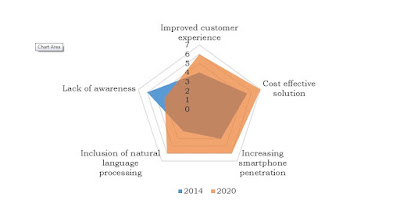
Driving factors for the market
1 Improved customer experience
2 Cost effective solution
3 Increasing smartphone penetration
Market Restraints and Opportunities
1 Lack of awareness
2 Inclusion of natural language processing
Intelligent Virtual Assistant Market Key Segments:
The global IVA market is segmented based on technology, vertical and geography.
By Technology
  • Text-to-Speech
  •  Speech Recognition

By Vertical
  •  Automotive
  •   Healthcare
  •  BFSI
  •  Retail (e-commerce)

By Geography
  •  North America
  •  Europe
  •  Asia-Pacific
  •  LAMEA

Key Players
  • Next IT Corporation
  •  Nuance Communications, Inc.
  •  IntelliResponse Systems, Inc.
  •  CodeBaby Corporation
  •  Creative Virtual Ltd.
  •  Speaktoit, Inc.
  •  Artificial Solutions
  •  eGain Corporation
  •  CX Company
  •  Anboto Group

Similar Reports:

Monday, September 30, 2019

Consumer Cloud Storage Services Market Rising Trends, Demand and Technology Growth 2019 to 2026

Consumer Cloud Storage Services Market Outlook: 2026

Consumer cloud storage is a cloud computing model in which data is stored on remote servers that can be accessed from the internet or cloud. It is maintained, operated, and managed by a cloud storage service provider on a storage server that is built on virtualization techniques. Consumer cloud storage services allow users to store, download, edit, and share their media content such as videos, images, documents, and various other files on the cloud. The consumer cloud storage supports more than 270 file formats and more than 100 languages. It facilitates working with personal devices such as smartphones, tablets, notebooks, and others. It is a remote server which is maintained, managed, and operated by cloud storage providers. It is basically a virtual mode of data storage. The data which is stored on the consumer cloud can be accessed and shared across devices through internet by the consumers. This provides a significant growth in the consumer cloud storage services market size.


Increase in the number of mobile devices and rise in adoption & penetration of the internet are the major factors driving the growth of the consumer cloud storage services market. In addition, growth in demand for consumer cloud storage services for data storage as well as advancements in mobile communication technologies fuel the growth of the consumer cloud storage services market. However, lack of network bandwidth and resistance of customers for adoption of new technology and data security hamper the growth of the market. Furthermore, increase in need for technologically advanced storage solutions and high rate of adoption among the SME’s are anticipated to provide major opportunities in the market.

Request TOC/ Sample Report @ 

The consumer cloud storage services market is segmented by storage tier, user age, and region. In terms of storage tier, the market is bifurcated into 50 GB-999 GB, 1 TB - 9.99 TB, and >= 10 TB. In terms of user age, the market is segmented into <18 years, 18-40 years, and >40 years. Based on region, it is analyzed across North America, Europe, Asia-Pacific, and LAMEA.


The key players profiled in the consumer cloud storage services market analysis are IBM Corporation, Oracle Corporation, Microsoft Corporation, Google (Alphabet Inc.), Apple Inc., Dropbox Inc., Sync.com Inc., Amazon .com Inc., pCloud AG, Hubic (OVH), and Mediafire.


KEY BENEFITS FOR STAKEHOLDERS
  • The study provides an in-depth analysis of the global consumer cloud storage services market size along with the current trends and future estimations to elucidate the imminent investment pockets.
  • Information about key drivers, restraints, and opportunities and their impact analysis on the market size is provided.
  • Porter’s five forces analysis illustrates the potency of buyers and suppliers operating in the industry.
  • The quantitative analysis of the global consumer cloud storage services industry from 2018 to 2026 is provided to determine the market potential.

KEY MARKET SEGMENTS

By Storage Tier
  • 50 GB-999 GB
  • 1 TB - 9.99 TB
  • >= 10 TB
By User Age
  • <18 years
  • 18-40 years
  • >40 years

Thursday, September 19, 2019

Context-Rich System Market Capacity, Production, Revenue Forecast 2019-2026

Context-Rich System Market Outlook - 2026

Context rich systems enable effective personalization that deal with eye, facial, gestures, and body recognition. Gesture recognition and face detection for human-computer interaction are some of the major examples of context rich systems. Usually, these system extracts signals imprinted by user, by tracking parameters such as location, the information of device in use, and many others. 


Then the system utilizes these parameters to adjust the content displayed to the user. As the input methods are modified based on the user’s situation, the contextually relevant data is displayed and proves to be convenient to perform tasks which is goal achieved by context-rich systems. Further, these systems smoothly link various services for seamless execution of operations and enhanced personalized experience which results into effective user feedback. The adoption of context-rich systems among various industry verticals is anticipated to fuel the global context-rich system market growth over the forecast period.

Request TOC/ Sample Report @ 

Advent of bring your own device (BYOD) and internet-connected devices for residential and business purposes, has procured the existence of personal ecosystems, and the subsequent demand for applications based on context-rich systems. This is a major factor expected to drive the growth of the global context-rich system market during the forecast period. Emergence of technologies are addressing enhanced security concerns for online transactions through context-rich systems such as authentication of user through facial detection and recognition. This is also a factor expected to fuel the growth of the global context-rich system market. However, end users’ data privacy issue is a factor that can hamper the growth of the global market to a certain extent.

The global context-rich system market is segmented based on component, device type, industry vertical, and region. Based on component, it is categorized into hardware, software, and services. By hardware, the market is further sub-segmented into sensors, mobile processor, and Bluetooth low energy chip. Based on device type, it is classified into tablets, biometrics, smartphones, desktops/laptops, and satellite navigation system (Satnav). Based on industry vertical, it is divided into gaming, healthcare, transportation, tourism and hospitality, ecommerce and marketing, and banking, finance, & insurance. Based on region, the market is analyzed across North America, Europe, Asia-Pacific, and LAMEA.

This report provides the profiles of the key players in the global context-rich system market, which include Amazon.Com, Inc., Google LLC, Microsoft Corporation, Apple Inc., Baidu, Inc., Ciklum ApS, DS-IQ, Inc., Flytxt B.V., Igate Corporation, InMobi Pte Ltd., and Securonix, Inc. These market players have implemented a number of strategies including partnership, expansion, collaboration, joint ventures, and others to heighten their status in the industry.


KEY BENEFITS FOR STAKEHOLDERS
  • The study provides an in-depth analysis of the global context-rich system market along with the current trends and future estimations to elucidate the imminent investment pockets.
  • Information about key drivers, restraints, and opportunities and their impact analysis on the global context-rich system market size is provided.
  • Porter’s five forces analysis illustrates the potency of buyers and suppliers operating in the global context-rich system industry.
  • The quantitative analysis of the global context-rich system market from 2019 to 2026 is provided to determine the market potential.
KEY MARKET SEGMENTS

BY COMPONENT
  • Software
  • Hardware
  • Sensors
  • Mobile Processor
  • Bluetooth Low Energy Chip
  • Services
BY DEVICE TYPE
  • Tablets
  • Biometrics
  • Smartphones
  • Desktops/Laptops
  • Satellite Navigation System (Satnav)
BY INDUSTRY VERTICAL
  • Gaming
  • Healthcare
  • Transportation
  • Tourism and Hospitality
  • Ecommerce and Marketing
  • Banking, Finance, & Insurance
  • Others
Access Complete Research Report @ 

Wednesday, September 11, 2019

Cloud Managed File Transfer Market Application Trends, Analysis and Forecasts 2019-2026

The cloud-managed file transfer technology helps in the secure transfer of data in an efficient and a reliable manner. The low infrastructure cost, affordable maintenance cost, and easy scalability are some of the factors, which attract the organizations to adopt cloud-managed file transfer solutions.


The growth in need for the secure data transfer, demand for the real-time visibility to the file transfer transactions, and cost-friendly subscription models drive the growth of the market. However, factors such as lack of awareness and reluctance to switch from the traditional file transfer solutions hinder the market. Moreover, growth in dependence of the healthcare and BFSI market on the cloud-based solutions is expected to provide lucrative growth opportunities for the market.

To Get Sample Report Copy to click here @ 

The report segments the cloud-managed file transfer market based on services, end users, and geography. Based on services, the market is classified into consulting, maintenance, and training. As per industry vertical, the market is divided into BFSI, media & entertainment, retail, manufacturing, IT & telecom, healthcare, and others. By region, it is analyzed across North America, Europe, Asia-Pacific, and LAMEA.

Comprehensive competitive analysis and profiles of major market players such as Axway Inc., IBM Corporation, Oracle Corporation, Software AG, CA Technologies Inc., GlobalSCAPE Inc., Wipro Limited, GlobalSCAPE, Inc, Ipswitch, Inc, and Signiant Inc., are also provided in this report.

Key Benefits :
  • This report provides an extensive analysis of the current and emerging market trends and dynamics in the global cloud-managed file transfer market.
  • In-depth analysis is conducted by constructing market estimations for the key market segments between 2016 and 2023.
  • This study evaluating competitive landscape and value chain is taken into account to elucidate the competitive environment across the geographies.
  • This report entails the detailed quantitative analysis of the current market and estimations through 20162023, which assists in identifying the prevailing market opportunities.
  • Comprehensive analysis of factors that drive and restrict the growth of the market is provided.

Cloud Managed File Transfer Market Key Segments:
By Services
  • Consulting
  • Maintenance
  • Training
By End Users
  • BFSI
  • Media & Entertainment
  • Retail
  • Manufacturing
  • IT & Telecom
  • Healthcare
  • Others
Get More Information on this Report @ 

Monday, September 9, 2019

Truck Rental and leasing Market to Witness High Revenue Growth During 2019 – 2026

Leasing is like renting but the time duration for leasing is long compared to renting.  Efficient operations decide the profitability of individual companies. Major companies have strong economy to acquire vehicles and customers. Rental and leasing serves small companies to compete effectively with big companies by providing better service, alternative products, or lower prices.  


Truck rental is a hire or lease business of trucks, which serves companies or agencies who do not own their own truck fleets but yet undertake freight transports. Leasing a truck minimizes the operational cost and risk arising from seasonal transport demand or uncertainty of contracts and ultimately, several truck operators prefer hiring or leasing trucks rather than purchasing them. Moreover, leasing a truck with full-service lease eliminates the financial liability of maintenance, servicing, and vehicle replacement. These factors act as drivers for the truck rental and leasing market growth.

Access Full Report (TOC, Figures, Chart, etc.) 

Growing stringency of emission norms for trucks is refraining buyers from purchasing new vehicles, as upgrade of an existing fleet requires huge investment. Hence, truck rental is a cost-effective solution compared to loans. Fuel prices contribute to nearly 70% of operating cost and, therefore, it is better to own a fuel-efficient truck fleet. Truck rental acts as an alternative to outright purchase, which is driving the truck rental and leasing market.

The factors that drive the truck rental and leasing market include increase in demand for optimization of operational risks, demand for cost effective solutions for fleet operating companies, stringent emission control regulations by governments of different countries, rise and fluctuation in fuel prices. Also, increase in freight transport supported by favorable trade policies, increase in residential moving activities, and freight demand due to improved economy, is propelling the truck rental and leasing market. In addition, the factors such as government regulations for transportation and lack of service truck rental providers in developing and underdeveloped regions are expected to hamper the growth of the market. However, development of infrastructure in developing countries provide growth opportunities for the market.

Ask for Request Sample Report @ 

The major companies profiled in the truck rental and leasing market share include Cruise America, PACCAR Leasing Company, Hertz, Penske Truck Leasing, Ryder, U-Haul (US), LeasePlan (Netherlands), Sixt (Germany), Amerco, Ryder System, and others.

The truck rental and leasing market is segmented on the basis of lease type, truck capacity, end user, and region. By lease type, it is bifurcated into finance lease and full-service lease.  On the basis of capacity, the market is classified into class 6 and below and Class 7 and above. By on end-use, it is categorized into commercial customers and non-commercial customers. By region, the market is analyzed across North America, Europe, Asia-Pacific, and LAMEA.

KEY BENEFITS FOR STAKEHOLDERS
  • This study comprises analytical depiction of the truck rental and leasing market with current trends and future estimations to depict the imminent investment pockets.
  • The overall potential is determined to understand the profitable trends to gain a stronger foothold in truck rental and leasing industry.
  • The truck rental and leasing market analysis report presents information related to key drivers, restraints, and opportunities with a detailed impact analysis.
  • The current market forecast is quantitatively analyzed from 2019 to 2026 to benchmark the financial competency.
  • Porter’s five forces analysis illustrates the potency of the buyers and suppliers in the industry.
TRUCK RENTAL AND LEASING MARKET KEY SEGMENTS

By Lease Type  
  • Finance Lease
  • Full-Service Lease
By Truck Capacity Type 
  • Class 6 and Below
  • Class 7 and Above
By End-User 
  • Commercial Customers
  • Non-commercial Customers

Thursday, August 29, 2019

Workspace as A Service Market Strategy Framework and Key Companies Analysis by 2019-2026

Workspace-as-a-Service (WaaS) is a type of desktop virtualization that enterprises use to provide their staff an access to data from any location, any time. Enterprises provide access to business applications using an employees electronic device of a choice. Furthermore, emergence of workspace-as-a-service solutions has enabled companies to help their employee log in to the service and enjoy access to virtual desktop environment. This functions like an employees office desktop. The solution has helped employees become highly productive


There are many drivers, restraints and opportunities that are influencing the growth of Workspace-as-a-Service market. Mobility trends including BYOD has added to the development of the WaaS market. Furthermore, use of personal gadgets including personal laptop, smartphones etc. that has resulted in growing concerns over security has been curbed by WaaS. However, lack of awareness about the advantages of WaaS, has hindered it growth. Besides this, need for high bandwidth paired with information technology infrastructure requirements are further obstructing market growth. Nonetheless, business verticals such as BFSI and Retail would create greater opportunities for WaaS market.

Request Sample Copy of this Market Research @ 

The Workspace-as-a-Service market is segmented by type, industry and geography. Based on types the market segments discussed in the market research report are system integration service, desktop as a service and many others. Industries served by Workspace-as-a-Service market are BFSI, retail, manufacturing, information technology and telecom etc. Regions explored in the report includes North America, Europe, Asia -Pacific and LAMEA.

The companies active in Workspace-as-a-Service market are adopting effective business strategies to stay competitive. Major brands are seen investing generously in research and development. Key market players are also seen eyeing the local brands for acquisition. Other business model such as joint venture and market entry strategies are helping prominent vendors to make their presence felt in new market and increase their product portfolio. Key market leaders are also covered in the market research report. List of companies discussed in the report includes Dell, Tech Mahindra, Unisys, Colt Technology Services Group Limited, Amazon Web Services Inc.

KEY BENEFITS FOR STAKEHOLDERS
  • The study includes an extensive evaluation of the different market entry strategies and brand positioning tactics adopted by prominent vendors to remain competitive.
  • Research methodologies such as applied, descriptive and exploratory techniques have been used intelligently to outline the key market drivers, restraints and opportunities influencing its progress in Asia -Pacific.
  • Advanced data analytics and smart data discovery in the study further outlines the recent advancements in technology that promise a bright future for the market.
  • The market research report further explores the policy amendments that are anticipated to determine the growth rate and market share.
  • Comprehensive study of recent launches, collaborations, acquisitions and mergers etc. highlights how enterprises are determined to stay competitive.
  • SWOT analysis of the market brings to the table the weaknesses, strengths, opportunities and threats and also pin points how brands manage of stay competitive.
  • Detailed insight on business imperative such as import and export status, production capability, product value, industry chain structure etc. is also discussed in the report.
Inquire for discount on this report @ 

WORKSPACE AS A SERVICE MARKET KEY SEGMENTS

Workspace as A Service Market By Type
  • System Integration Service
  • Desktop as A Service
Workspace as A Service Market By Industry
  • BFSI
  • Retail
  • IT and Telecom
  • Hospitality
  • Manufacturing

Smart Process Application Market Demand, Development and Restraint Analysis by 2019-2026

Software developed to support an enterprises or business process management (BPM) activities in a highly collaborative way is termed as smart process application. The software provides quicker and more consistent user experience. Furthermore, faster and end to end process times are now possible by engaging smart process application. Besides this, this emerging category of tools can also streamline human centric business procedures.


There are several drivers, restraints and opportunities that are shaping the smart process application market. Demand for affordable solutions has increased the adoption rate of the smart process application. In addition, organizations seeking solutions that would help them improve their business agility are now relying on such solutions. However, lack of awareness about the benefits of smart process application has hampered the growth of the market to a greater extent. The North American region is anticipated to generate better opportunities in the future.

To Get Sample Report Copy to click here @ 

The smart process application market is segmented based on deployment model, services, size of the organization, industries and geography. The deployment model discussed in the market research report includes on premise and cloud. Services examined in by the study consists of professional services, managed services and support and maintenance services. Furthermore, small and medium size enterprises and large enterprises today relying greatly on smart process application. The adoption rate of the solution is clearly visible in business verticals like BFSI, Telecom, Healthcare, Retail, Manufacturing, Media and Entertainment and many others. Regions anticipated to witness rapid growth are North America, Europe, Asia -Pacific and LAMEA.

Prominent market players are also seen acquiring new companies or local market players to maintain their competitive edge. Other business strategies favored by the companies include constant upgradation, joint ventures and collaborations. Prominent market players discussed in the market research report are OpenText, SAP, Kofax, EMC Corporation, KANA,Salesforce.com and others.

KEY BENEFITS FOR STAKEHOLDERS
  • The market research report provides an integrated information on the major drivers, restraints and opportunities influencing the industry growth during the forecast period.
  • The study further drills down to produce data volume by components, end customers and demography.
  • SWOT analysis of major brands, highlights weaknesses, strengths, opportunities and threats. The data proves effective for business owners planning on designing their marketing and branding strategies.
  • Region wise business performance discussed in the market research report would be valuable for enterprises planning to explore new areas.
  • The report not only examines the market dynamics but also takes a closer look at the growth rate and industrial chain structure.
  • Study further weigh up on the prominent market players and their business strategies to maintain their position.
  • Assessment of upstream and downstream market also forms an important part of the report.

SMART PROCESS APPLICATION MARKET KEY SEGMENTS

Smart Process Application Market By Deployment Model
  • On premise
  • Cloud
Smart Process Application Market By Service
  • Professional Services
  • Managed Services
  • Maintenance and Support Services
Smart Process Application Market By Size of the Organization
  • Small and Medium Size Enterprises
  • Large Enterprises

Smart Process Application Market By Industry
  • BFSI
  • Telecom
  • Healthcare
  • Manufacturing
  • Media and Entertainment
  • Others

Thursday, August 22, 2019

Self Organizing Network Market Rising Trends, Demand and Technology Growth 2019 to 2025

Self Organizing Network Market Report, published by Allied Market Research, forecasts that the global market is expected to garner revenue of $8.3 billion by 2022, registering a CAGR of 11.1% during the forecast period 2016 - 2022. In the year 2015, North America dominated the global SON market owing to early adoption of advanced network technologies mainly in the U.S. and Canada. However, Asia-Pacific is expected to exhibit the highest growth over the forecast period.


SON is being increasingly deployed by the telecom operators owing to benefits such as faster response time, improved network management, and self-healing network capabilities among others. SON is widely deployed in several cellular networks which include 2G/3G and 4G/long term evolution (LTE). Among these, the already established 2G/3G cellular networks are expected to contribute over two-thirds of the overall market revenue, throughout the analysis period, owing to a wide coverage. However, the 4G/LTE segment is expected to grow rapidly, with a CAGR of over 15.1% during the forecast period. This growth is likely to be driven by faster deployment of SON in the rapidly growing 4G/LTE cellular networks, primarily in the developed countries.

Get more information on this report Request Sample Report @ https://www.alliedmarketresearch.com/request-for-customization/1409 

Within the different SON architectures, centralized (C-SON) architecture is more popular and widely accepted amongst network operators, worldwide. However, the hybrid self-organizing network segment (H-SON) is expected to witness highest growth during the forecast period, as it combines the features provided by S-SON and D-SON, such as optimization and real-time response in complex network arrangement.

Key Findings Self-organizing Network Market:
  • 4G/LTE segment is expected to exhibit high growth potential as 4G/LTE network operators have started deploying SON to deliver streamlined network performance and improved service quality.
  • The centralized (C-SON) architecture is the most popular architecture and is expected to hold a significant market share throughout the analysis period.
  • H-SON architecture is anticipated to exhibit fastest growth throughout the forecast period, as it enables effective handling of heterogeneous network, reduces operation cost, and offers real-time response to network issues.
  • Asia-Pacific is expected to surpass North America, and emerge as a leader in the SON market during the forecast period.
The report outlines the competitive scenario of the self-organizing networks market, providing a comprehensive study of the key strategies adopted by major companies. Key companies profiled in the report are Telefonaktiebolaget LM Ericsson, Cellwize Wireless Technologies Pte Ltd., Airhop Communications, Inc., Amdocs Inc., Nokia Solutions and Networks, Cisco Systems Inc., NEC Corporation, Huawei Technologies Co., Ltd, Ascom Holding AG, and RadiSys Corporation.


Tuesday, August 20, 2019

Emission Control Technology Market Gwoth, Scope Emerging Trends, Analysis and Forecasts 2026

According to a recent report published by Allied Market Research, titled,"Global Emission Control Technology Market by Technology, Fuel Type, and End-User Vertical: Global Opportunity Analysis and Industry Forecast, 2018-2025," the global emission control technology market size was valued at $91,540.0 million in 2017, and is projected to reach $160,314.9 million by 2025, registering a CAGR of 7.3% from 2018 to 2025.

At present, Asia-Pacific dominates the market, followed by Europe, LAMEA, and North America. China dominated the global emission control technology market in 2017, whereas France is expected to grow at a significant rate in Europe during the forecast period.
Factors such as emission control regulations by government and an increase in automobile production fuel the growth of the emission control technology market. In addition, the adoption of nanotechnology in emission control technologies boosts market growth. However, growth in production of electric vehicles and the high cost of catalysts hinder the emission control technology market growth. Conversely, innovations in emission control catalysts and government initiatives for emission reduction in developing nations are anticipated to provide remunerative opportunities to the key player for the emission control technology market expansion.
The government of various countries are taking initiative for emission control of greenhouse gases from the industries such as automotive, marine, off-highway, rolling stock, and industrial. In recent days, there are some areas where vehicles do not meet the emission control standards set by the government. For instance, around half of the American citizens are living in the areas, which do not meet the emission control standards and are majorly responsible for pollution, which includes particulate matter, and other smog-forming emissions. Emission control technologies such as diesel particulate filter (DPF), diesel oxidation catalyst (DOC), gasoline particulate filter (GPF), exhaust gas recirculation (EGR), and selective catalytic reduction (SCR), and others provide with an effective way to reduce industry related emission control.
Emission of harmful pollutants from the railways also possess a serious threat to the ecosystem, due to which initiative is being taken to control these emissions for cleaner air. For instance, emission control devices are to be fitted to locomotives of South Western Railway to cut harmful emission from diesel trains. Eminox, an emission control technology manufacturer developed the selective catalytic reduction & continuously regenerating trap (SCRT), which works in a similar fashion to the emission technologies used in cars. This device consists of various filters and platinum catalyst and can reduce particulate matters by over 90%, nitrogen oxide by over 80%, and cut hydrocarbon and monoxide by over 90%.
In recent days, greenhouse exhaust emission is the main concern as the ships carry cargo and passengers all over the world, they produce harmful pollutants which have a damaging impact on human life and the ecosystem. Shipping is responsible for transporting around 90% of the goods, which is traded around the world. Ships such as tugs, cruise liners, and other travel in very environmentally sensitive areas, due to which engine of ships should meet the strict emission control regulations. Leading emission control technology manufacturer is introducing new technologies to meet the strict emission regulations and reduce pollution. For instance, Man Energy Solutions, an emission control technology manufacture introduce a technology to reduce the pollutants emission in the sea. This technology also provides improved engine efficiency, utilization of cleaner fuels, and others.
Key Findings of Emission Control Technology Market Study :
  • The diesel segment in fuel type generated the highest revenue in 2017.
  • By end-user vertical, the automotive segment generated the highest revenue in 2017.
  • LAMEA is anticipated to exhibit the highest CAGR during the forecast period.
In 2017, Asia-Pacific contributed the highest emission control technology market revenue, followed by Europe, LAMEA, and LAMEA.
The emission control technology market key players analyzed in this report are BASF, Clean Diesel Technologies, Inc., Clariant, Cormetech, Corning Incorporated, DCL International Inc., Johnson Matthey, Tenneco Inc., Umicore, Walker Exhaust Systems, and others.

Monday, August 19, 2019

Oil & Gas Security Market Size Is Expected To Reach USD 36,012 Million By 2023

According to a new report published by Allied Market Research, titled, Oil & Gas Security Market by Component, Security System, and Application: Global Opportunity Analysis and Industry Forecast, 2017-2023, the oil & gas security market was valued at $ 23,141 million in 2016, and is projected to reach $36,012 million by 2023, growing at a CAGR of 6.7% from 2017 to 2023. The command & control segment is anticipated to grow at the highest rate during the forecast period.


North America generated the highest revenue in the global oil & gas security market in 2016 due to its technological advancements and developed infrastructure, and introduction of innovative solutions by the key players in the region. The Asia-Pacific oil & gas security market is expected to grow at the highest rate of 8.8% during the forecast period.

Get more information on this report Request Sample Report @ 

Exploring & drilling segment generated maximum share of revenue in 2016 and is expected to dominate the market throughput the forecast period at the CAGR of 7.2%. Among services, managed services segment is expected to witness highest CAGR of 8.4% during the forecast period.
The report features a competitive scenario of the oil & gas security industry and provides a comprehensive analysis of key growth strategies adopted by major players. The key players profiled in the study are Cisco Systems, Inc., Siemens AG, Symantec Corporation, Honeywell Corporation, Inc., Corporation, Intel Corporation, General Electric, Microsoft Corporation, ABB Ltd., and Lockheed Martin Corporation. These players have adopted competitive strategies, such as geographical expansions, mergers & acquisitions, new product launches, and partnerships & collaborations, to augment the growth of the oil & gas security market.

Key Findings of the Oil & Gas Security Market:
  • The software segment accounted for the highest share of the oil & gas security industry by component in 2016, growing at a CAGR of 6.1% from 2017 to 2023.
  • The surveillance segment by security system generated the highest revenue share in 2016 and is projected to grow at a rate of 6.1%.
  • The U.S. oil & gas security market generated the highest share, valued at $ 7,298 million, in terms of revenue in 2016.
  • The oil & gas security market for managed services is expected to witness the highest growth rate during the forecast period.

The Key Players Profiled in the Report are as follows:
  • Cisco Systems, Inc.
  • Siemens AG
  • Symantec Corporation
  • Honeywell Corporation, Inc.
  • Parsons Corporation
  • Intel Corporation
  • General Electric
  • Microsoft Corporation
  • ABB Ltd.
  • Lockheed Martin Corporation
About Us:
Allied Market Research (AMR) is a full-service market research and business-consulting wing of Allied Analytics LLP based in Portland, Oregon. Allied Market Research provides global enterprises as well as medium and small businesses with unmatched quality of "Market Research Reports" and "Business Intelligence Solutions.” AMR has a targeted view to provide business insights and consulting to assist its clients to make strategic business decisions and achieve sustainable growth in their respective market domain.

We are in professional corporate relations with various companies and this helps us in digging out market data that helps us generate accurate research data tables and confirms utmost accuracy in our market forecasting. Each and every data presented in the reports published by us is extracted through primary interviews with top officials from leading companies of domain concerned. Our secondary data procurement methodology includes deep online and offline research and discussion with knowledgeable professionals and analysts in the industry.

Contact:

David Correa
5933 NE Win Sivers Drive
#205, Portland, OR 97220
United States
USA/Canada (Toll Free):
+1-800-792-5285, +1-503-894-6022, +1-503-446-1141
UK: +44-845-528-1300
Hong Kong: +852-301-84916
India (Pune): +91-20-66346060
Fax: +1(855)550-5975